Data, Insights and Blog Posts
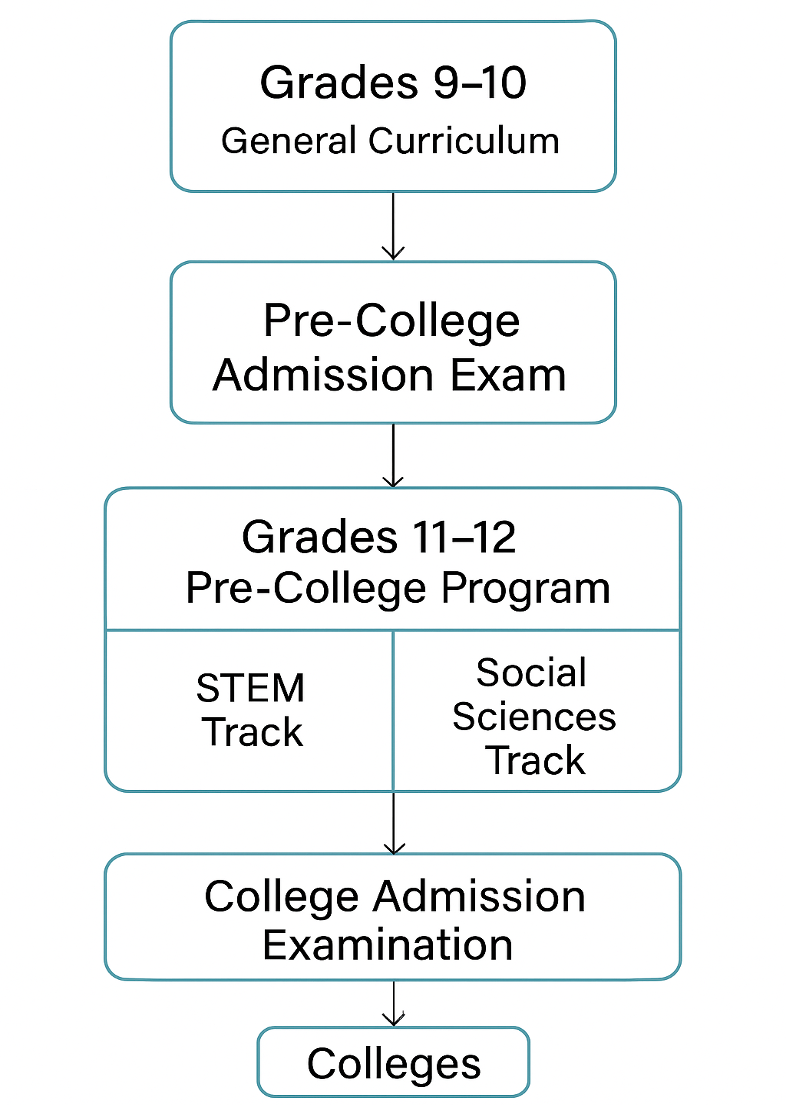
Ethiopian Pre-College Program Data 101Most of my current research draws on education data from Ethiopia's secondary education system, which is organized into two sequential levels. The first level, referred to as the General High School Program, comprises grades 9 and 10 and follows a general curriculum. Upon completion of the program, students are required to sit for a standardized General High School Exit Examination, also known as the Pre-College Admission Examination. Those who score above a nationally determined cutoff are admitted to the second level of secondary education—the Pre-College Program.
The Pre-College Program includes grades 11 and 12 and offers two specialized academic tracks: Natural Sciences (STEM) and Social Sciences, each leading to distinct fields of study at the college level. At the end of the program, students take the national College Admission Examination. Those scoring above the track-specific cutoff are admitted to one of several public universities. See the diagram below.
The data used in my research are primarily derived from these national standardized examinations. The first dataset consists of records from the Pre-College Admission Examination spanning a 15-year period and includes information on more than 13 million students. The second dataset contains records from the College Admission Examination, covering more than 2.3 million students, which can be linked to the first dataset using student identifiers. Both datasets include demographic variables (e.g., age and sex), school characteristics (e.g., school ID, zone, region, and school type), and student classifications (e.g., regular or repeat exam takers). Importantly, both datasets also provide subject-level scores for all tested academic subjects, information on the Pre-College track pursued, and, for some years, the official cutoff scores for both Pre-College admission and college admission.
A sample of the linked data is available here. Researchers interested in collaborating on projects that use these data are encouraged to get in touch.
Back to Data & Insights